
Milan has a well-earned reputation for being expensive. Fashion weeks, Michelin-starred restaurants, and luxury boutiques don’t exactly scream budget travel. But here’s the truth: you don’t need a big wallet to fall in love with this city. There are so many free things to do in Milan that you can spend days exploring without spending much at all.
I’ve spent years wandering Milan’s streets, from grand piazzas to quiet Art Nouveau corners most tourists never find. In this guide, I’m sharing the 15 best completely free experiences, plus three almost-free options that cost just a few euros and are absolutely worth it.
15 Best Free Things to Do in Milan
Whether it’s your first visit or you’ve been here a dozen times, Milan always has something new to offer and you don’t always have to pay to see it. Here are the best free things to do in Milan, tried and tested by someone who grew up here.
From iconic landmarks to hidden gems tucked away in lesser-known neighborhoods, this list covers the full range of what Milan has to offer. Get your walking shoes on.
1. Visit Piazza del Duomo
There’s nowhere more central or more dramatic than Piazza del Duomo. This is Milan’s beating heart, and the sheer scale of the Gothic cathedral that dominates it never gets old. Construction started in the 14th century and took over five centuries to complete. You’ll understand why once you see it.
The entrance to the piazza costs nothing, and there’s plenty to look at without buying a ticket for the terraces. The façade alone is packed with over 3,400 statues and 100 gargoyles. Look closely and you’ll spot a dragon, a figure that reportedly inspired the Statue of Liberty, and even a tennis racket carved into the stone. At the top of the tallest spire stands La Madonnina, a golden statue of the Virgin Mary that Milanese locals deeply revere. There’s even an unofficial city anthem dedicated to her.
2. Spin on the Bull’s Balls at Galleria Vittorio Emanuele II
Yes, you read that right. Just steps from Piazza del Duomo, inside one of the world’s oldest and most beautiful shopping galleries, there’s a local tradition you can’t skip. On the gallery floor, four mosaics represent Milan and three former Italian capitals. One of them features a bull and locals say spinning your right heel on its, ahem, most private area, three times brings good luck.
It’s a quirky little ritual that Milanese people have been doing for generations. The gallery itself is stunning, with its soaring glass dome and ornate ironwork, so even if you skip the spinning, it’s worth stepping inside for a look. This is one of those budget travel Milan experiences that costs nothing but stays with you long after you leave.
3. Explore Castello Sforzesco, Parco Sempione, and Arco della Pace
Castello Sforzesco is one of Milan’s most recognizable landmarks, and the good news is you can explore its sprawling courtyards and outer walls completely for free. This 15th-century fortress was home to the powerful Sforza family and now houses several museums. You don’t have to enter the paid sections to soak up the history and atmosphere just walking the grounds takes you back centuries.
Through the castle, you’ll reach Parco Sempione, Milan’s largest and most beloved park. Locals come here to jog, picnic, play with their kids, and simply breathe. At the far end of the park stands the Arco della Pace, a neoclassical arch that offers a striking contrast to the medieval castle behind you. It’s one of the best free Milan sightseeing on a budget experiences in the city you get medieval, romantic, and neoclassical architecture all in one walk.
4. Stroll Around Brera
Brera is one of those neighborhoods that makes you slow down without even trying. It’s Milan’s artistic quarter, full of cobblestone streets, ivy-covered walls, independent boutiques, and cafés that spill out onto the pavement. The streets here are mostly pedestrian, and the whole area has a relaxed, timeless feel.
Wander along Via Fiori Chiari, Via Madonnina, or Piazza del Carmine for the most charming views. While the Pinacoteca di Brera art gallery requires a ticket, everything outside is free. Don’t miss the Brera Botanic Garden it’s a tiny, tranquil green space open Monday through Friday with free admission. For history buffs, the Biblioteca Braidense is a beautifully preserved historic library you can explore at no cost (bring your ID and be at least 16 years old).
5. Free Museums
Milan has a number of free museums or offers regular free entry days that smart visitors plan around. Pirelli Hangar Bicocca is probably the best example of a museum that’s always free for its permanent collection. The highlight? Anselm Kiefer’s towering installation, Seven Heavenly Palaces enormous lead structures that make you feel genuinely tiny. It’s a jaw-dropping experience and one of the best free cultural sites in the city.
Beyond that, many civic and state museums offer free entry on specific days each month. Museo del Novecento is free on the first Sunday and on the first and third Tuesdays from 2PM. Castello Sforzesco’s museums follow the same schedule. The Pinacoteca di Brera, Armani Silos, and Gallerie d’Italia are all free on the first Sunday of the month. Worth checking the exact dates before you visit.
Need a Hand Planning Your Trip to Milan? I’ve Got You!
If the options feel overwhelming, a custom Milan itinerary can make your trip much smoother. A local travel planner can help you focus on the things you’ll genuinely love without the stress of figuring it all out yourself.
6. Admire Modern Architecture at Porta Nuova
Not everything worth seeing in Milan is centuries old. Porta Nuova is the city’s sleek, modern counterpoint to its historic center. Start at Piazza Gae Aulenti, a circular elevated square surrounded by glass skyscrapers. On a hot day, you’ll see kids splashing in the central fountain it’s got real energy.
From there, step into Biblioteca degli Alberi, a thoughtfully designed public park with geometric garden plots that double as a beautiful walking space. Just beyond it, you can’t miss Bosco Verticale the iconic twin towers covered in hundreds of trees and plants, often photographed and widely celebrated as one of the most innovative buildings in the world. It’s one of the top Milan architecture spots you can admire completely for free.
7. Explore the Monumental Cemetery
This might sound like an odd suggestion, but trust me on this one. Cimitero Monumentale is unlike any cemetery you’ve visited before. Built in 1866 and sprawling across 250,000 square meters, it’s essentially an open-air museum that traces Milan’s artistic history from the 19th century to today. Realism, Art Nouveau, and even contemporary sculpture all coexist here.
Right at the entrance, the Famedio a temple-like hall houses the remains of celebrated Milanese figures, including poet and novelist Alessandro Manzoni. The tombs throughout the cemetery are works of art: intricate bronze statues, carved marble figures, and monumental architecture that reflects the tastes of the era. Free guided tours (90 minutes) are available to book in advance and are well worth joining. The cemetery is open Tuesday through Sunday from 8AM to 6PM. Dress modestly no shorts or bare shoulders.
8. Admire the Skyscrapers at CityLife
CityLife is Milan’s newest major district, and it offers a completely different side of the city. Three iconic skyscrapers define the skyline here: the Isozaki Tower (straight), the Hadid Tower (twisted), and the Libeskind Tower (curved). Each one is bold, striking, and distinct an architectural statement in itself.
Wandering the base of these towers costs nothing and gives you a front-row seat to what Milan’s 21st-century identity looks like. The surrounding residential buildings by Libeskind echo the same futuristic curves, making the whole area feel cohesive. It’s one of the lesser-known but genuinely rewarding Milan landmarks list experiences especially if you enjoy modern design.
9. Discover Milan’s Art Nouveau District
Porta Venezia is Milan’s Stile Liberty (that’s what locals call Art Nouveau) showcase, and it’s criminally undervisited. If you’re into architecture, this neighborhood is going to blow you away. The buildings here are layered with organic curves, floral motifs, ceramic tiles, and wrought-iron details that are totally unlike anything in the rest of the city.
The highlights include Palazzo Castiglioni, which is considered the symbol of Liberty style in Milan; Casa Galimberti, with colorful ceramic panels depicting plants, flowers, and human figures; and Casa Campanini, famous for its stained glass and intricate ironwork. While you’re here, peek through the gates of Villa Invernizzi if you’re lucky, you’ll spot actual flamingos wandering in the garden. And keep an eye out for Ca’ de l’Oreggia, a building with an intercom shaped like an ear.
10. Walk Along Colorful Houses in Via Lincoln and Find Casa 770
Most tourists never make it here, which is exactly why it’s so special. Via Lincoln is a quiet, narrow street lined with colorful villas, each with their own little garden. It feels more like a village in Liguria than central Milan an unexpectedly cheerful hidden gem in a city known more for its grey winters.
A short walk away on Via Poerio, you’ll find Casa 770, a near-exact replica of a Brooklyn building that became a landmark for the Orthodox Jewish community. Sixteen replicas were built worldwide, and Milan’s version is one of them. It hosts cultural and religious events and is a fascinating piece of global Jewish heritage right in the middle of the city.
11. Visit Some Churches
Italy has churches on every corner, but these five in Milan are each genuinely unique and worth a visit. They’re not just beautiful they have stories, legends, and quirks that most travelers never hear about.
Skip the repetition and head to the ones below. Each one offers something you won’t find anywhere else.
San Bernardino alle Ossa
This is probably the most unusual church in Milan. Its side chapel is decorated entirely with human bones and skulls real ones. It might sound morbid, but the effect is surprisingly contemplative rather than grim. A must-see for anyone curious about unusual historic places in Milan.
Sant’Ambrogio
One of Milan oldest and most important basilicas, Sant’Ambrogio is dedicated to the city’s patron saint. It’s a masterpiece of Romanesque architecture, and it’s packed with legends. Outside, the Devil’s Column reportedly has two holes made by Satan’s horns after Saint Ambrogio wrestled him to the ground. Some say you can still smell sulfur if you lean close. Inside, a bronze serpent said to be Moses’ original healing serpent is on display. Fascinating stuff.
Sant’Eustorgio
This church claims to house relics of the Three Wise Men which is why its bell tower is topped with an eight-pointed star instead of a cross. The cloisters often host art and photography exhibitions, and in summer you can grab an aperitivo there for around €10. The church itself is free.
Santa Maria presso San Satiro
This is a Renaissance masterpiece by Bramante, and its claim to fame is a breathtaking optical illusion. Because of space constraints during construction, Bramante created an apse that appears to be several meters deep but is actually just about 90 centimeters. Standing at the entrance, it’s almost impossible to tell. Then you walk closer and your brain short-circuits.
San Lorenzo
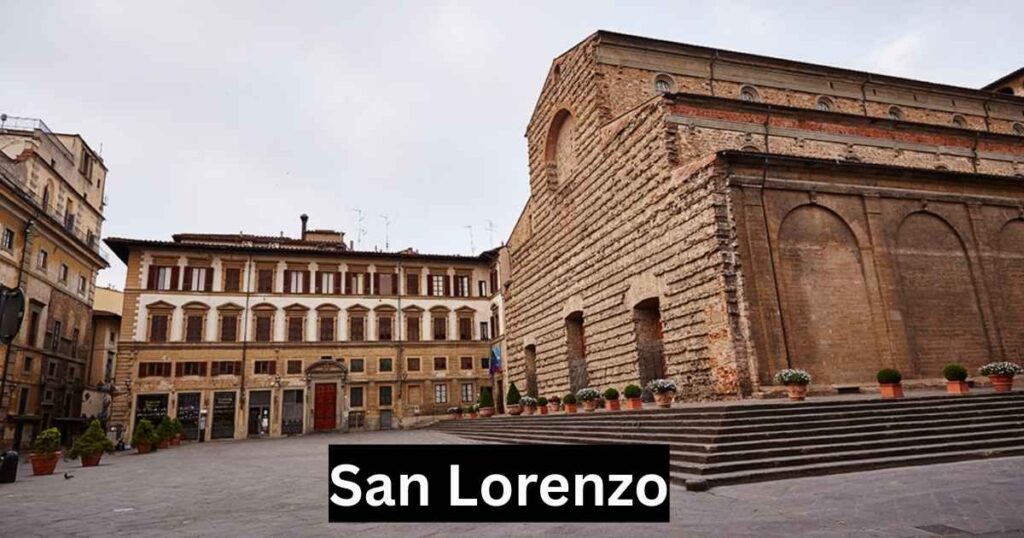
The oldest church in Milan, San Lorenzo has a distinctive floor plan based on a square rather than the traditional cross shape. Out front, the ancient Roman colonnade is a popular gathering spot for the city’s younger and more alternative crowd. When locals say ‘meet at the columns,’ everyone knows exactly where they mean.
12. Window Shopping in Quadrilatero della Moda
Milan’s famous fashion district is defined by four streets: Via Montenapoleone, Via Manzoni, Via della Spiga, and Corso Venezia. Buying anything here will cost you dearly this is where you’ll find Gucci, Prada, Armani, and every other luxury name you can think of. But walking through it costs nothing.
The window displays are practically art installations, and the streets themselves are elegant and beautifully maintained. My personal favorite is Via Gesù quiet, lined with refined architecture, and worth a slow stroll. This is truly one of the best Milan local experiences even if you’re not spending a cent.
13. Visit Piazza Affari and L.O.V.E.
Outside the Italian Stock Exchange in Piazza Affari stands one of Milan’s most talked-about pieces of public art: L.O.V.E., a large marble hand by Maurizio Cattelan. Most people know it as ‘il dito’ the finger. The hand gives a fascist salute, but all the fingers except the middle one have been eroded away.
What does it mean? Cattelan left that deliberately open. Some people read it as a critique of the financial world. Others think it’s the other way around. Either interpretation works, and the ambiguity is exactly the point. It’s provocative, funny, and thought-provoking all at once perfect for the city that gave the world modern fashion, design, and finance.
14. Spend the Night Around Navigli
Milan’s canal district, known as the Navigli, is one of the city’s most atmospheric areas. The canals were built in the 12th century to transport goods into the city and Leonardo da Vinci reportedly contributed to their design. Today, the Darsena (Milan’s former main dock) and the stretch along Naviglio Grande are packed with bars, restaurants, and locals soaking up the evening.
Before settling in for drinks, take a walk around the neighborhood. Look for the case di ringhiera traditional Milanese buildings with shared inner courtyards where everyone’s front door opens onto a communal balcony. Find Vicolo dei Lavandai, a tiny alley where women washed clothes until the 1950s (the name actually means ‘washermen’ a historical twist). Cross the small stone bridge after dark for a gorgeous view of the lights reflecting on the canal water. This is one of the best things to do in Milan at night for free.
15. Discover Milan’s Stunning Entryways
One of Milan’s best-kept secrets isn’t in a guidebook it’s on the doorstep of its residential buildings. Peek inside the entryways of palazzi across the city and you’ll often find jaw-dropping lobbies: sculpted stonework, mosaic floors, wrought-iron staircases, and painted ceilings.
Two standout examples are Palazzo Berri Meregalli and Palazzo Luraschi, but honestly, just wandering and looking up or glancing inside open doors is half the fun. There’s even a Taschen photography book dedicated entirely to Milan’s entrances. It’s one of the best Milan hidden gems locals love, and it requires nothing but curiosity and a willingness to wander.
3 Very Cheap Things to Do in Milan
Not everything needs to be free to be worth it. These three experiences each cost just a few euros but offer some of the most authentic and memorable moments the city has to give.
Think of them as affordable Milan activities that punch way above their price point.
Hop on a Vintage Tram
Milan’s iconic orange trams have been rolling through the city since the early 20th century, and they’re still in daily use. Lines 1 and 2 pass through the historic center, giving you front-row views of landmarks like Castello Sforzesco and the Duomo area. The wooden interiors have barely changed it’s like riding a living museum.
You don’t even need to buy a paper ticket. Just tap your contactless card or phone when you board and the city’s transit system will calculate the cheapest fare for your day and charge accordingly. It’s a cheap travel Italy Milan experience that’s also genuinely practical transport.
Have an Aperitivo
Aperitivo isn’t just a drink it’s a ritual. Milan invented it (at least, that’s what Milanese people will tell you), and it typically means drinks served alongside small bites before dinner. In practice, it often becomes dinner itself. Some bars bring you a plate when your drink arrives. Others have a buffet. A few offer small plates à la carte.
Budget around €10–€15 for a full aperitivo experience. For the best value, try Fonderie Milanesi if you want a generous buffet in a cool industrial space. For higher quality, Lacerba in Brera is one of the city’s most loved spots book ahead. oTTo is great for vegetarians and doesn’t take reservations, so just show up. Aperitivo is the quintessential Milan local experience and skipping it would be a genuine shame.
Have a Coffee or Drinks at Bar Luce by Wes Anderson
Inside Fondazione Prada, filmmaker Wes Anderson designed a café that looks like a film set from his own movies. Pastel colors, vintage pinball machines, curved wooden ceilings, and a general sense that time stopped sometime in the 1960s it’s instantly recognizable to fans and delightful even if you don’t know his work.
The foundation charges an entry fee, but Bar Luce is accessible without a ticket. A coffee costs a couple of euros. A Spritz will run you about €10. Either way, it’s worth every cent. This is one of those affordable Milan activities that feels far more special than the price tag suggests.
Too Many Options?
Milan has a lot going on, and it can feel overwhelming to figure out where to spend your limited time. A local Milan travel planner can build a custom itinerary around exactly what you love history, food, architecture, or all of the above.
Practical Tips to Visit Milan
Planning a trip here is much easier when you know what to expect. Here are the most common questions visitors ask before heading to Milan.
Is Milan Expensive?
It can be, but it doesn’t have to be. As this guide shows, there are so many things to do in Milan for free that a budget trip is entirely possible. Skip the high-end SPAs and the multi-course restaurant dinners, and opt for aperitivo and gelato walks instead. You’ll enjoy the city just as much arguably more, since you’ll be moving at a local’s pace.
Accommodation is the biggest expense to manage. You don’t need to stay in the city center Milan’s metro system is efficient and easy to navigate, so staying slightly further out can save you significantly without cutting into your sightseeing time.
How Do You Get Around Milan Cheaply?
Most of the highlights in this guide are within reasonable walking distance of each other in the historic center. That said, Milan’s public transport network metro, buses, trams, and trains is very reliable and affordable. You won’t need to buy paper tickets: just tap your contactless card or phone when boarding and the system charges the cheapest daily fare automatically.
Taxis are expensive and slow during peak hours (8–10AM and 5–7PM), so skip them unless it’s an emergency. If you want to cover more ground quickly, the metro is your best bet. Bikes are also popular and widely available through sharing schemes if you’re comfortable cycling in city traffic.
How Many Days Should You Spend in Milan?
One full day gives you enough time for the Duomo, Galleria, Brera, and an evening in Navigli. But honestly, three days is the sweet spot. That gives you time to explore at a relaxed pace and maybe squeeze in a day trip Como, Bergamo, and the Cinque Terre are all reachable by train.
When Should You Visit Milan?
Spring and autumn are ideal for pleasant weather and fewer crowds. Summer is busy and hot but the days are long, which means more time for exploring. Avoid August if you can the heat is intense and many local restaurants and shops close for the holiday. Winter is cold and sometimes foggy, but Christmas in Milan is genuinely magical, with festive lights and markets across the city.
Conclusion
Milan is one of Europe’s most dynamic cities, and experiencing it doesn’t require a luxury budget. With this guide, you now have a full Milan itinerary for budget travelers covering iconic squares, underground art installations, historic churches, futuristic skyscrapers, and canal-side evenings. The free things to do in Milan range from world-class art to local traditions that have existed for centuries.
So next time someone tells you Milan is too expensive, you can smile and disagree. Book the flights, pack comfortable walking shoes, and explore the city the way the locals do. The best of Milan has always been free.
FAQs
What are the best free things to do in Milan for first-time visitors?
Start with Piazza del Duomo, then head to Galleria Vittorio Emanuele II and Brera. These three spots give you a strong feel for Milan’s history, architecture, and local culture without spending a euro.
Is Milan worth visiting on a budget?
Absolutely. The majority of Milan’s best experiences its architecture, public spaces, neighborhoods, and cultural landmarks are completely free. Budget travelers can have a fantastic trip here.
Are there free museums in Milan?
Yes. Pirelli Hangar Bicocca is free for its permanent collection. Many civic museums including Museo del Novecento and the Castello Sforzesco museums offer free entry on the first Sunday of the month and select Tuesdays.
What hidden gems in Milan do locals recommend?
Porta Venezia’s Art Nouveau buildings, Via Lincoln’s colorful houses, Cimitero Monumentale, and Milan’s ornate palazzo entryways are all loved by locals and frequently overlooked by tourists.
How many days do you need in Milan to see the main attractions?
Two to three days is ideal. One day covers the city center highlights; a second day allows you to explore neighborhoods like Brera, Porta Venezia, and Navigli; and a third day could be used for a day trip or a deeper dive into modern Milan at CityLife and Porta Nuova.

Dylan Hart is a travel writer who explores hidden destinations and local cultures across the globe. With years of adventure experience, he blends storytelling with practical travel tips to help readers plan authentic journeys. His goal is to inspire mindful, well-informed exploration rooted in real experiences and expert insight.