
Planning your first best places to visit in italy a little overwhelming and honestly, that makes complete sense. Italy is one of the most diverse countries in the world. You’ve got ancient Roman ruins, rolling Tuscan vineyards, dramatic Alpine peaks, and sun-drenched coastal villages all packed into one boot-shaped peninsula. Knowing where to start isn’t easy.
I’m Italian, and I’ve spent years traveling across this country only two regions left to tick off. In this guide, I’m sharing the 11 best places to visit in Italy for first-timers based on real experience, not just popular opinion. Whether you love history, food, nature, or all three, I’ve got you covered. You don’t have to see them all just the ones that match your travel style.
Best Places to See in Italy on Your First Visit
Italy rewards slow travelers. The more time you spend in each place, the more you’ll fall in love with it. That said, these 11 destinations are the ones I’d recommend to any first-timer a solid mix of iconic must-sees and a few surprises.
From the eternal city of Rome to the colorful cliffs of Cinque Terre, Italy’s top destinations each offer something completely unique. Let’s break them down one by one so you can figure out which ones belong on your Italy bucket list destinations.
1. Rome
Rome isn’t just a city it’s a living, breathing history lesson. One moment you’re standing in front of a 2,000-year-old amphitheater; the next, you’re eating the best carbonara of your life at a tiny trattoria tucked down a cobblestone side street. It’s loud, chaotic, and absolutely unforgettable. Rome is one of those places that genuinely changes how you see the world.
As Italy’s capital and one of the most visited cities on Earth, Rome sits at the top of nearly every Italy travel itinerary and for good reason. Whether you have two days or five, this city will fill every single hour.
Top Things to Do
- Walk through the Colosseum, Roman Forum, and Palatine Hill these are among the most famous landmarks in Italy and tell the story of an empire that shaped the Western world.
- Visit the Vatican: even if you’re not religious, the Sistine Chapel and St. Peter’s Basilica will leave you speechless. Note: 2025 is a Holy Year, so expect larger crowds than usual.
- Toss a coin into the Trevi Fountain yes, it’s touristy, but it’s one of those iconic Italian landmarks to visit that you simply can’t skip.
- Eat your way through the city: cacio e pepe, amatriciana, supplì, and gelato are all non-negotiable.
Best Time to Visit
Spring (March–May) and fall (September–November) offer the best weather and smaller crowds. Summer is brutal both in terms of heat and tourist volume. Winter can be quiet and affordable, especially around Christmas when the city takes on a magical glow.
2. Venice
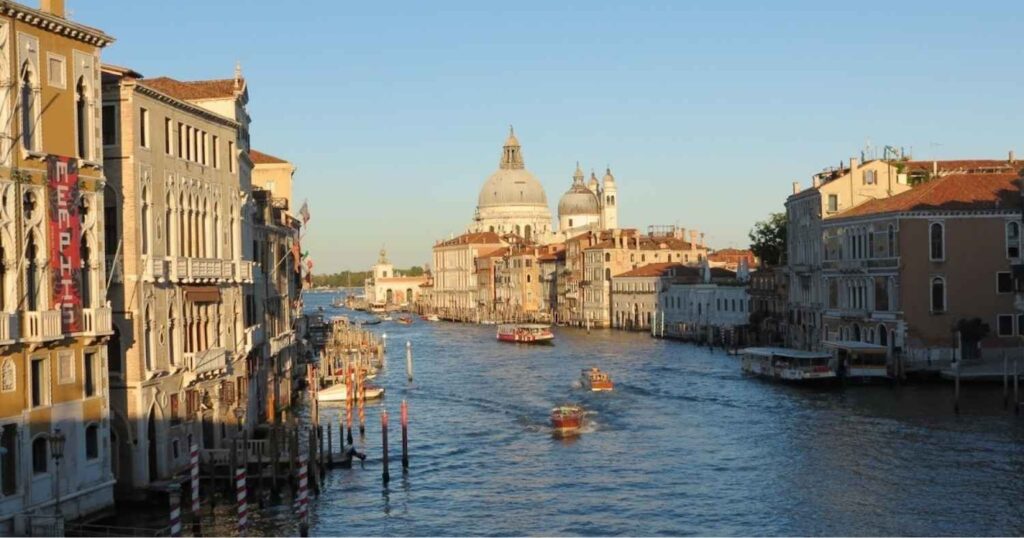
There’s nowhere else on Earth quite like Venice. No roads, no cars just canals, bridges, and centuries-old palaces reflected in still green water. Wandering through Venice feels like stepping into another world entirely, one where the rules of normal cities simply don’t apply. It’s mysterious, romantic, and unlike anywhere else you’ll ever visit.
Yes, it’s touristy. But Venice is one of those places where the crowds don’t take away the magic they just make timing your visit a little more important. For first-timers building an Italy vacation plan, Venice is an absolute must.
Top Things to Do
- Get completely lost in the calli (narrow alleyways) this is the single best way to experience the real Venice.
- Visit Piazza San Marco: see St. Mark’s Basilica, the Doge’s Palace, and climb the Campanile for panoramic views.
- Take a vaporetto (water bus) down the Grand Canal for budget-friendly sightseeing from the water.
- Day-trip to Murano (glass-blowing) and Burano (colorful houses) two of the most scenic places in Italy.
- Try cicchetti at a traditional bacaro Venice’s answer to tapas, best enjoyed with a glass of spritz.
Best Time to Visit
Spring and early fall are ideal. Winter is surprisingly atmospheric foggy mornings, empty alleys, and a moody calm that summer tourists never get to experience. February brings the famous Venice Carnival, which is spectacular but crowded. Avoid July and August if you can.
3. Florence
Florence is the birthplace of the Renaissance and one of the most beautiful Renaissance cities Italy has to offer. It’s compact enough to explore on foot, yet rich enough in art, architecture, and food to keep you busy for days. Walking through Florence feels like wandering through a giant open-air museum except the museum also has excellent wine.
It’s undeniably touristy, but so is every city worth visiting in Europe. Florence earns every bit of attention it gets. This is one of those Italian cultural sites that genuinely lives up to the hype.
Top Things to Do
- Marvel at the Duomo Santa Maria del Fiore is a masterpiece inside and out. Climb Brunelleschi’s Dome for some of the best views in Tuscany.
- Spend time at the Uffizi Gallery, home to Botticelli’s The Birth of Venus and works by Leonardo da Vinci. It’s my personal favorite museum in all of Italy.
- See Michelangelo’s David at the Accademia Gallery seeing it in person is a completely different experience than seeing it in photos.
- Walk across the Ponte Vecchio and watch the sunset from Piazzale Michelangelo.
Best Time to Visit
Spring and fall are perfect for Florence. The weather is mild and the city feels more manageable. Summer evenings are magical but daytime crowds can be intense. Winter is quieter and cheaper, though some smaller venues shorten their hours.
4. Amalfi Coast
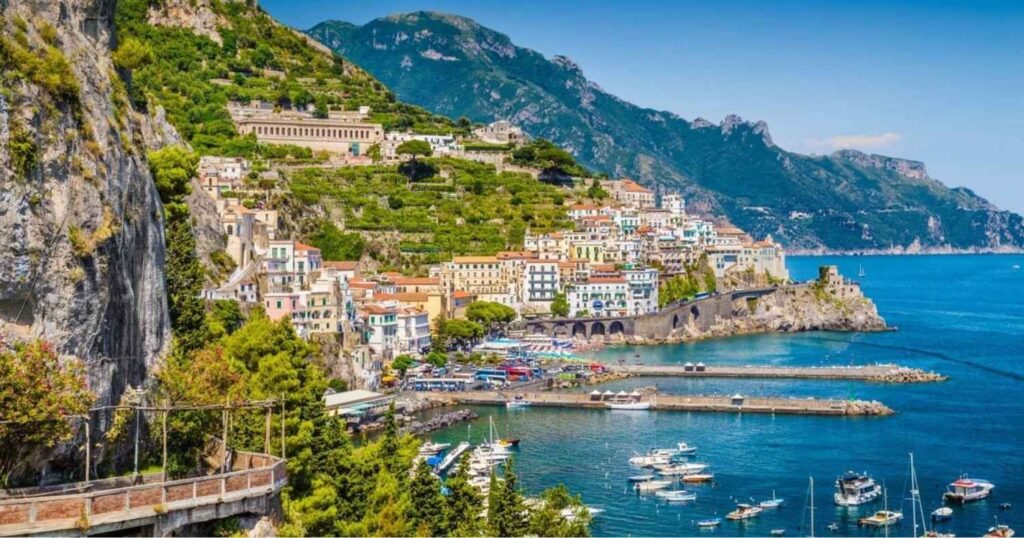
The Amalfi Coast is one of those places that looks almost too beautiful to be real. Colorful villages cling to cliffsides above a shimmering turquoise sea, lemon trees grow everywhere, and every hairpin road turn reveals another jaw-dropping view. It’s dramatic, indulgent, and completely unlike anywhere else in Italy.
Located about an hour south of Naples and three hours from Rome, the Amalfi Coast is a UNESCO World Heritage site and one of the top Italian coastal towns in the world. It belongs on every Italy holiday destinations list full stop.
Top Things to Do
- Explore Positano, Amalfi, and Ravello each has its own personality and charm.
- Visit Villa Cimbrone in Ravello: the Terrace of Infinity offers some of the most breathtaking views in southern Italy.
- Take a boat trip to Capri, including a visit to the legendary Blue Grotto.
- Hike the Path of the Gods (Sentiero degli Dei) a 7km coastal trail with unreal panoramic views that takes around 2–3 hours.
- Discover the Fiordo di Furore, a hidden beach wedged between cliffs one of the most photogenic spots on the entire coast.
Best Time to Visit
April through June and September are the sweet spot warm, sunny, and far less chaotic than peak summer. July and August are beautiful but insanely crowded. Winter is off-season; many restaurants and hotels close, and it’s not ideal for a first visit.
5. Dolomites
If you thought Italy was all ancient cities and sun-baked coastlines, the Dolomites will completely reframe your thinking. These jagged, otherworldly peaks in northeastern Italy are a UNESCO World Heritage site and one of the most dramatic mountain landscapes on the planet. Whether you’re into hiking, skiing, or just driving through jaw-dropping scenery, this place is extraordinary.
The Dolomites are one of Italy’s best-kept secrets for scenic landscapes in Italy relatively unknown compared to Rome or Venice, but every bit as impressive. This is northern Italy travel at its most stunning.
Top Things to Do
- Visit Tre Cime di Lavaredo, Lago di Braies, and Seceda you don’t need to be an experienced hiker to enjoy these.
- Do a road trip through the mountain passes: Passo Gardena and Passo Sella are both spectacular.
- Ski the Sellaronda circuit in winter a legendary 25-mile loop through four valleys.
- Explore the Christmas markets in Bressanone and Ortisei from late November through January.
- Relax at QC Terme Dolomiti in Val di Fassa heated mountain pools and panoramic saunas. Absolute bliss.
Best Time to Visit
Summer (July–September) is perfect for hiking and road trips. Winter (December–March) is best for skiing and offers a magical snowy atmosphere. Spring and late fall can be unpredictable with closed trails and limited accommodation I’d stick to summer, early autumn, or winter for a first visit.
6. Tuscany
Tuscany is the Italy of your imagination made real. Rolling hills, cypress-lined roads, medieval hilltop towns, world-class wine, and food that will ruin you for everywhere else. Florence is the obvious headline act, but the rest of the region is just as incredible arguably more so, because it’s less crowded and more authentically Italian.
For food destinations in Italy, Tuscany is hard to beat. Add in the scenery and the cultural heritage, and you have one of the most complete travel experiences in Europe.
Top Things to Do
- Explore Siena and try to time your visit with the Palio di Siena horse race chaotic, intense, and unforgettable.
- Drive through the Val d’Orcia (a UNESCO World Heritage site) and visit Pienza and Montalcino.
- Tour the Chianti region and taste Chianti Classico directly at the source.
- Soak in the natural hot springs at Terme di Saturnia or Bagni San Filippo pure magic.
- Visit Bolgheri for Super Tuscan wines and Monteriggioni for a perfectly preserved medieval fortress.
Best Time to Visit
Late spring through early autumn is the best window. Spring and fall offer mild weather and fewer crowds; early summer has long golden days that are perfect for countryside drives. Avoid August if you can it’s peak season and prices surge everywhere.
7. Lake Como
Lake Como has been a retreat for the wealthy and creative for centuries and one look at it tells you exactly why. Ringed by forested mountains, dotted with elegant villas, and lined with charming lakefront towns, it’s one of the most beautiful places in all of northern Italy. You don’t need George Clooney’s budget to enjoy it, though. A ferry ticket and a good pair of walking shoes go a long way.
For romantic places in Italy, Lake Como is hard to top. It’s the kind of place that makes you want to slow down, order a coffee, and just sit and stare at the view for an hour.
Top Things to Do
- Explore the ‘golden triangle’ of Bellagio, Varenna, and Menaggio cobblestone streets, lakefront promenades, and excellent food.
- Tour Villa del Balbianello (famous for its Star Wars and Casino Royale appearances) and Villa Carlotta.
- Take a boat ride hopping between towns by public ferry is one of the great simple pleasures of Italian travel.
Best Time to Visit
Spring (April–June) and early fall (September–October) are ideal mild weather, manageable crowds, and beautiful scenery. Summer is hot and expensive but great for swimming and boat trips. Winter is too quiet, with many venues closed and the lake at its least inviting.
8. Cinque Terre
Cinque Terre ‘Five Lands’ in Italian is exactly what it sounds like: five small fishing villages strung along a rugged stretch of the Ligurian coast, connected by dramatic cliffside hiking trails and a train line. The villages are colorful, compact, and completely captivating. Manarola and Vernazza are particularly photogenic, especially at golden hour.
It’s one of those places that appears on every Italy sightseeing guide, and rightly so. Just be smart about when you visit this is one of the most crowded spots in all of Italy during peak summer.
Top Things to Do
- Hike between the villages the coastal trails offer some of the best views in Italy. Check trail conditions before you go, as some sections close seasonally for maintenance.
- Visit each village for its own character: Vernazza for its harbor, Manarola for its views, Monterosso for its beach.
- Take a boat tour to see Cinque Terre from the sea a completely different perspective.
- Try trofie al pesto Liguria is the birthplace of pesto, and you’ll taste the difference immediately.
Best Time to Visit
April through June and September through October are the best months warm enough to hike and swim, but far less chaotic than July and August. Winter is off-season; many places close and hiking trails may be shut. Not ideal for a first visit.
9. Milan
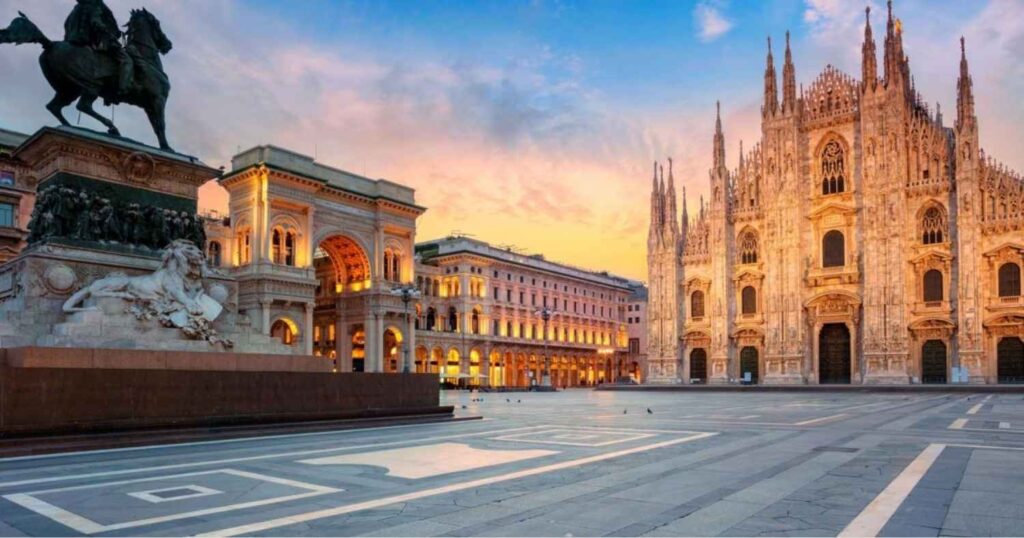
Milan doesn’t have the immediate romantic charm of Rome or Florence, but spend a day or two here and you’ll quickly understand why Italians love it. It’s sleek, stylish, and endlessly interesting a city of world-class art, incredible architecture, and the best aperitivo culture in the country. It also happens to be one of the best-connected cities in Italy for day trips.
For Italy trip ideas for couples or solo travelers who want a more local, modern Italian experience, Milan often gets overlooked in favor of the classics. That’s your gain.
Top Things to Do
- Visit the Duomo di Milano climb to the rooftop on a clear day and you can actually see the Alps.
- Walk through Galleria Vittorio Emanuele II and spin on the bull mosaic for good luck it’s a real Milanese tradition.
- See Leonardo da Vinci’s The Last Supper visits are strictly limited, so book months in advance. It’s genuinely one of the most powerful cultural experiences in Italy.
- Explore the Brera District for art, boutiques, and a relaxed neighborhood atmosphere.
- Head to the Navigli canals in the evening for aperitivo order a drink and get free food. This is the Milan way.
Best Time to Visit
Spring and fall are perfect. Summer is oddly quiet locals leave the city in droves, which makes it feel strangely empty. Winter is cold but magical in December, when the city fills with Christmas markets, ice rinks, and festive lights.
10. Verona
Most people know Verona as the setting of Romeo and Juliet. That’s a fine starting point, but there’s so much more to this city than a fictional balcony. Verona is compact, walkable, and packed with genuinely impressive history including a Roman amphitheater that pre-dates the Colosseum and one of the most beautiful medieval town squares in Italy.
It’s an easy stop if you’re traveling between Venice and Milan, and it’s one of those northern Italy travel destinations that often gets skipped but absolutely shouldn’t be.
Top Things to Do
- Visit the Arena di Verona one of the best-preserved Roman amphitheaters in the world. Seeing an opera or concert here is extraordinary.
- Stop by Juliet’s Balcony for a quick look yes, it’s touristy, but it’s a quick detour and makes for a good story.
- Walk across Castelvecchio and Ponte Scaligero for the best views over the city.
- Relax in Piazza delle Erbe the historic heart of Verona, perfect for coffee and people-watching.
Best Time to Visit
Verona is a year-round destination. Summer brings the famous opera season at the Arena, which is absolutely worth attending. Spring and fall are ideal for exploring on foot without the summer crowds.
11. Bologna
Bologna is Italy’s most underrated city and if you love food, it might just become your favorite. Nicknamed ‘La Grassa’ (The Fat One), it’s considered the culinary capital of Italy. Real Bolognese ragù, hand-rolled tortellini, mortadella this is where those dishes were born and where they taste best. It’s also a lively university city with a young, energetic atmosphere that feels very different from the tourist-heavy cities further south.
For first-timers who want to experience Italy tourism guide recommendations beyond the obvious, Bologna is the answer. Fewer crowds, more locals, and better food per square meter than almost anywhere else.
Top Things to Do
- Explore Piazza Maggiore the heart of Bologna, surrounded by the Basilica di San Petronio and Palazzo d’Accursio.
- Climb the Asinelli Tower for panoramic views over Bologna’s famous red rooftops nearly 500 steps, but absolutely worth it.
- Walk under the porticoes 38 kilometers of covered walkways that are a UNESCO World Heritage site and completely unique to Bologna.
- Eat your way through the Quadrilatero District: mortadella, tortellini, and real ragù. Note that in Bologna, ragù is never served with spaghetti.
Best Time to Visit
Bologna works year-round. It doesn’t suffer from the extreme tourist crowds of Rome or Venice, which makes it a great choice at almost any time. Spring and fall are particularly pleasant for walking around.
Essential Tips and FAQs for Your First Trip to Italy
You’ve got your list of places. Now let’s talk about the practical stuff how long to stay, when to go, how to get around, and how to build an itinerary that actually works for you.
Italy is one of the most visited countries in the world, and with good reason. But without a bit of planning, it’s easy to over-pack your schedule, miss the best experiences, and spend half your trip in transit. These Italy travel tips will help you avoid the most common mistakes.
How Many Days Do You Need in Italy?
It depends on how many places you want to see, but 10 days is a solid starting point for most first-timers. With 10 days, you can comfortably cover three destinations like Rome, Florence, and Venice without feeling like you’re racing through the country. Two weeks is even better, because it lets you slow down and actually experience each place rather than just check it off a list.
With a week or less, keep it simple: pick 2–3 places max and spend at least 2 nights in each. If you have fewer than 5 days, choose one region and take day trips from a central base. Trying to rush Italy is one of the biggest mistakes first-timers make so when in doubt, do less but do it better.
When to Visit Italy?
The best time to visit Italy for sightseeing in the main cities is spring (April–June) or fall (September–October). The weather is comfortable, the crowds are more manageable, and prices haven’t hit their summer peak. These are also the best seasons for photography soft light, blooming landscapes, and the kind of golden afternoons that make Italy look like a painting.
Summer (July–August) is great for the coast and the mountains but brutal in cities. August in particular is when Italians themselves go on holiday beaches and coastal towns get absolutely packed. Winter works well for Christmas markets, skiing in the Dolomites, and exploring cities without the crowds, but some coastal and lake destinations essentially shut down.
Italian Holidays to Keep in Mind
January 6 – Epiphany
Easter (March/April) – Busy period with some closures
- April 25 – Liberation Day
- May 1 – Labor Day
- June 2 – Republic Day
- August 15 – Ferragosto (peak summer holiday expect major travel disruption)
- December 8 – Immaculate Conception
- December 25–26 – Christmas
- December 31–January 1 – New Year’s Eve and Day
How to Get Around
Italy has one of the best train networks in Europe. If you’re mainly visiting cities, trains are almost always the fastest and most convenient option. High-speed trains (Frecciarossa and Italo) connect Rome, Florence, Milan, Venice, and Bologna in just a couple of hours always book in advance for the best fares. Regional trains are slower but affordable and work well for reaching smaller towns like the Cinque Terre villages or Lake Como from Milan.
Renting a car is a different story in cities don’t do it. ZTL zones (limited traffic areas) can get you fined without even realizing it, and parking is a nightmare. But for the countryside Tuscany, the Dolomites, the Amalfi Coast hinterland a car is transformative. It gives you freedom to stop at viewpoints, explore tiny villages, and move at your own pace. For domestic travel between far-apart destinations like Milan to Sicily, a flight makes more sense than a train.
Planning Your Itinerary: How to Choose the Best Places for Your Trip
The biggest mistake people make when planning an Italy travel route is trying to cram in too many destinations. Italy looks compact on a map but getting between places takes time, energy, and money. Focus on what you actually love history, food, nature, coast and build your trip around that rather than just visiting whatever’s most Instagrammed.
Think logistically too. Rome–Florence–Venice is a classic combination that works perfectly by train. Milan–Lake Como–Dolomites is a fantastic northern loop. If you want the Amalfi Coast, base yourself in Naples or Sorrento and day-trip from there. Mixing a city with a scenic natural area like Florence with Tuscany, or Milan with Lake Como gives your trip variety and stops it from feeling like a museum marathon.
My Tip to Plan the Best Itinerary
Mix it up. Pair a big city with a smaller town or a natural area so your trip has rhythm. Some combinations that work brilliantly: Rome + Florence + Tuscany + Amalfi Coast; Milan + Lake Como + Venice + Dolomites; Rome + Florence + Venice + Dolomites. Aim for 2–3 nights minimum per destination. And leave some unscheduled time the best Italy experiences often happen when you’re not trying to be anywhere specific.
So, Are You Ready to Plan the Perfect Trip to Italy?
Italy has an almost unfair number of incredible places, and narrowing it down to the best ones for your first trip really does come down to what excites you most. History lover? Go to Rome and Florence. Outdoor adventurer? The Dolomites or Amalfi Coast. Foodie? Bologna. Romantic getaway? Lake Como or Venice. There isn’t a wrong answer there’s just the right fit for you.
Now that you know the best places to visit in Italy for first-timers, the fun part begins: actually planning the trip. Use this guide as your starting point, then dig into the detailed destination guides for wherever you’re heading. Italy is waiting and trust me, it’s worth every bit of effort it takes to get there.
Not Sure How to Put It All Together? I Can Help You
If you’re still unsure where to start or how to build an itinerary that fits your time, budget, and travel style, I offer custom Italy travel planning services. From full itineraries to quick one-on-one calls, I’ll help you design a trip that’s practical, personal, and actually enjoyable not just a list of things to rush through. You can find more details on the travel planning page.
FAQs
What are the best places to visit in Italy for first-timers?
Rome, Florence, and Venice are the classic trio for first-timers. Add the Amalfi Coast or Tuscany if you have more time. Each offers a different side of Italy, from ancient history to Renaissance art to dramatic coastal scenery.
How many days do I need for a first trip to Italy?
Ten days is a solid minimum for covering 3 destinations comfortably. Two weeks is even better if you can manage it it gives you time to actually slow down and enjoy each place rather than just passing through.
What is the best time of year to visit Italy?
Spring (April–June) and fall (September–October) are the best seasons for most destinations. The weather is pleasant, crowds are lighter than summer, and prices are more reasonable. Avoid August if you hate crowds and heat.
Is Italy easy to travel around as a first-timer?
Yes Italy has an excellent high-speed train network connecting all the major cities. Renting a car is only necessary if you’re exploring the countryside. Cities are very walkable once you arrive.
What food should I try on my first trip to Italy?
In Rome: carbonara, cacio e pepe, and supplì. In Florence: bistecca fiorentina and lampredotto. In Venice: cicchetti and seafood risotto. In Bologna: tortellini in brodo and real ragù. And gelato, obviously everywhere.
Conclusion
Italy is one of those rare countries where the reality actually exceeds the expectation but only if you plan it right. The 11 best places to visit in Italy for first-timers covered in this guide each offer something genuinely unique: ancient history in Rome, Renaissance art in Florence, canal magic in Venice, coastal drama along the Amalfi Coast, mountain grandeur in the Dolomites, and culinary brilliance in Bologna and Tuscany. The hardest part isn’t finding places worth visiting it’s choosing which ones to prioritize.
Start with the destinations that match your travel style, plan for at least 2–3 nights per stop, and resist the urge to over-schedule. Italy rewards the traveler who slows down, lingers over a long lunch, and takes a wrong turn occasionally. Whether you have a week or a month, this country will give you memories that genuinely last a lifetime. Buon viaggio!

Dylan Hart is a travel writer who explores hidden destinations and local cultures across the globe. With years of adventure experience, he blends storytelling with practical travel tips to help readers plan authentic journeys. His goal is to inspire mindful, well-informed exploration rooted in real experiences and expert insight.